



Sudan
Aid agencies marked 1,000 days of war in Sudan on Friday with a grim reminder that the conflict has created the world’s biggest hunger crisis and largest displacement emergency.
Every day, civilians have been “paying the price for a war they did not choose”, said the UN aid coordination office, OCHA.
The United Nations says over 20 million Sudanese require health assistance while 21 million are in desperate need of food.
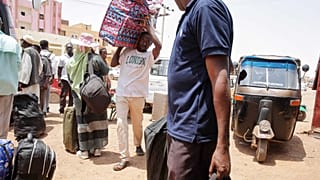
An estimated 13.6 million people are currently displaced, making Sudan the largest displacement crisis in the world.
More than 4.3 million of them have fled across borders, placing immense strain on neighbouring countries.
Elsewhere, fighting is continuing “across multiple fronts in Kordofan” further west, OCHA spokesperson Jens Laerke said.
Speaking to journalists in Geneva, he noted that sieges have cut off the towns of Kadugli – capital of South Kordofan state - and Dilling - a town to the north of Kadugli - restricting food, healthcare, and access to farms and markets.
In Darfur, meanwhile, “fighting on the ground and drone attacks from the sky continue”, while long-range strikes on civilian infrastructure have also been recorded far beyond the front lines, Laerke said.
Children continue to be killed and injured amid ongoing clashes between the Sudanese Armed Forces and paramilitary Rapid Support Forces.
According to the UN Children’s Fund (UNICEF), a staggering 5,000 youngsters have been displaced every day since the conflict began in April 2023.
“Many have been displaced not once but repeatedly, with violence following them wherever they flee,” said UNICEF spokesperson Ricardo Pires.
He warned that millions of children are also at risk of rape with survivors including babies.
“Behind every one of these numbers is a child, frightened, hungry, sick and wondering why the world has not come to help,” Pires added.
Women are also victims of “rampant” sexual violence and abuse, with some 12 million people - mostly women and girls - at risk of gender-based violence, according to OCHA.
“Female-headed households are now three times more likely to be food insecure and three-quarters of these households report not having enough to eat,” said Laerke.
The global crisis in humanitarian funding has impacted the UN’s work and that of its partners in Sudan, with only 36 per cent of the $4.2 billion requested last year finally funded by donors.
As a result, OCHA will only be able to assist 20 million out of the nearly 34 million people believed to need humanitarian support in Sudan. The plan has cost $2.9 billion.
“Today our call is urgent. First, an immediate cessation of hostilities and real steps towards a lasting peace,” Laerke said.
“Second, adherence to international humanitarian law with access facilitated across conflict lines and protection of civilians including aid workers and civilian infrastructure.”
![Mali: Human Rights Watch Denounces Crimes Against Civilians [Africanews Today]](https://images.euronews.com/articles/stories/09/95/82/57/320x180_cmsv2_28c9ac37-8aa3-55e9-9921-eb3fc8143fdc-9958257.jpg)

01:47
Pregnant women in Yemen at growing risk as healthcare limited by fighting
01:01
Senegal's Macky Sall withdraws from race for UN top job
00:57
All seven candidates to lead UN receive Security Council veto in informal poll
01:09
Ex-fighters in Ethiopia's Tigray region register for reintegration programme
01:11
Zambia elected for three-year term on UN Human Rights Council
02:13
Somalia’s children face deadly malnutrition crisis as aid dwindles