



DR Congo
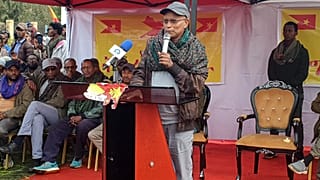
DR Congo opposition politicians, members of the opposition coalition nicknamed "C64", rejected the Constitutional Court’s ruling on the referendum law, which could see President Felix Tshisekedi run for a third term after a referendum.
"The Court’s ruling confirms the plot against the constitutional order and paves the way for the Balkanisation of the Republic," says Dieudonne Bolengetenge, said Secretary-General of the "Together for the Republic" party, at a press conference in Kinshasa.
Democratic Republic of Congo's constitutional court on Tuesday approved a referendum law that critics say could open the way for President Felix Tshisekedi to seek a third term in office.
President Felix Tshisekedi, 63, came to power in 2019 and his second -- and under the current rules -- final five-year mandate is due to end in late 2028.
DR Congo's constitution states the number and length of presidential terms cannot be revised.
But the opposition has rallied against a bill backed by the ruling majority that would change the rules for holding constitutional referendums.
Announcing the decision on state TV, Constitutional Court president Dieudonne Kamuleta Badibanga said the proposed law was in line with the constitution.
The court approved clauses that could allow the president to amend the constitution through a constituent assembly followed by a referendum in the event of a "major dysfunction" of state institutions.
However, judges expressed reservations about other provisions, including one allowing the president to call a referendum on any issue deemed of "fundamental" importance.


02:07
DRC accuses ex-president Kabila of planning 'general attack' on the country
01:05
DR Congo protests Formula One's 'indefensible' decision to race in Rwanda
01:09
Africa CDC probes missing millions meant for ebola response
01:39
Former DR Congo president says the country is 'in peril'
02:19
DRC: New fighting in Masisi as AU delegation rushes to save ceasefire
02:47
KoBold Metals uses AI to search for critical minerals in Congo