



Democratic Republic Of Congo
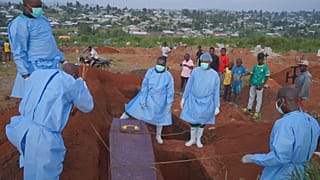
The latest data published by the Democratic Republic of Congo government on Wednesday shows that the number of Ebola cases has exceeded 5,000, including 2,378 deaths.
Responders are warning the deadly haemorrhagic virus is spreading at an unprecedented speed, outpacing efforts to slow it down in the remote eastern part of the country.
Starting from the first officially confirmed case in mid-May, the current outbreak has spread about three times faster than the deadliest on record.
On Tuesday, the World Health Organisation said it remained a global health emergency with a high risk of spreading to more countries in the region.
WHO Director-General Tedros Adhanom Ghebreyesus said at a meeting of experts that the epidemic “is far from being under control”.
A response to the outbreak in the six eastern provinces has been complicated by an ongoing armed conflict, mass displacement, and weakened healthcare services.
Acute shortages and delays in funding reaching the ground has left overworked health staff unpaid for months, triggering crippling strikes and walkouts on the frontline.
Thérèse Anyiya, a nurse working in Ituri’s capital Bunia, said she is exhausted by the work demands and poor working conditions.
In addition, there is a deep mistrust within the community resulting in attacks on health workers, notably at the epicentre in Ituri province.
Residents on Monday attacked a health team in the territory of Aru after a suspected case was reported there.
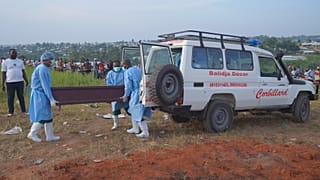
A mob set fire to an ambulance and damaged two other vehicles, according to Michael Wani, president of the Union of Cultural Associations for the Development of Ituri.
Another key challenge has been the lack of approved vaccines or treatments for the rare Bundibugyo virus, responsible for the current outbreak.
Most new cases are being reported outside of the people being monitored, showing it has spread quickly and left surveillance teams racing to catch up.
While the case fatality rate is so far 47.4 per cent, it is far worse in some places where response efforts are more challenging, such as in North Kivu province where the fatality rate is 70 per cent.
Experts believe the virus began spreading from the mining town of Mongbwalu as early as February, months before authorities declared the outbreak on 15 May.




01:55
Nigeria steps up airport health screenings over Ebola fears
01:19
Nigeria's health minister says first Ebola case remains isolated
00:42
Tigray is still at war, rebel leader warns, claiming tactical victories
01:18
WHO: Africa facing 'complex' Ebola outbreak after Nigeria reports first case
01:49
Nigeria can stop Ebola spread, former disease control chief says
01:10
Nigeria's first ebola case sparks shock and urgent concern nationwide